Remembering Joe Dunton 12/10/2025, 12:00:00 AM
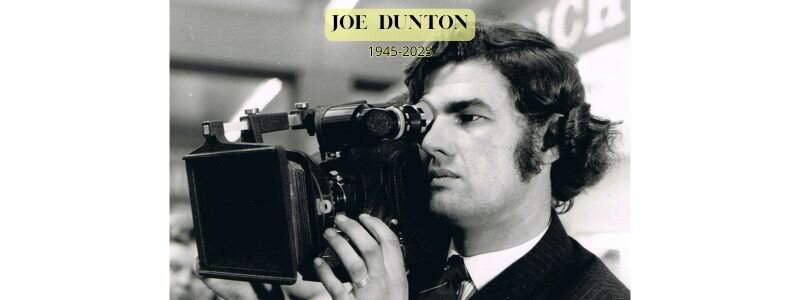
Joe Dunton: a legend behind the lenses of cinema
Joe Dunton was one of those rare people who truly changed how movies look and feel. His recent passing marks the end of a remarkable era in cinematography, but his influence remains alive in every camera crew, film set, and lens built with passion for storytelling.
Who was Joe Dunton
Joe Dunton began his career as a television engineer, long before he became a key figure in the film world. When he entered the cinema industry, he quickly started solving on-set challenges. One of his early achievements was helping create video-assist systems, which allowed directors to watch what the camera was recording — something that today seems normal, but back then was revolutionary.
Why his work changed lenses and cinema technology
Dunton’s curiosity and love for filmmaking led him to focus on lenses. He designed the first 20:1 zoom lens for 35 mm film cameras, giving filmmakers more freedom to create dynamic shots. Later, with his own company, he pushed innovation even further by adapting and improving vintage glass, especially anamorphic lenses.
Thanks to him, many classic lenses found new life and returned to film sets with upgraded performance. He also created small but important tools, like heated eyepieces, that solved practical problems for camera crews working in difficult environments.
What Joe Dunton means for film lovers
For anyone passionate about lenses, cine, or cámaras de cine, Joe Dunton represents the spirit of invention. His work shows that cinema depends not only on directors and actors, but also on the people behind the technology — the ones who design the tools that let stories shine on screen.
A meaningful connection with CineLenses
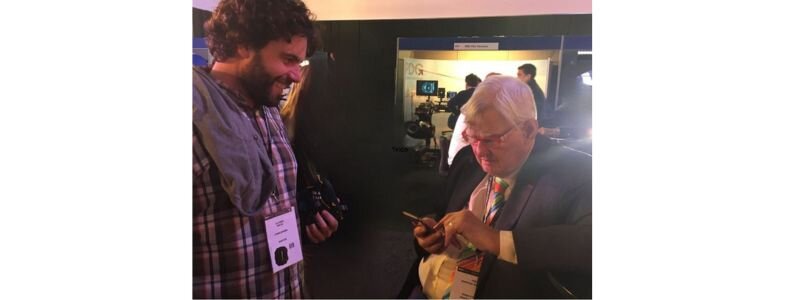
In 2018, Álvaro, CEO of CineLenses, had the honor of showing Joe Dunton the first version of the CineLenses App during BSC Expo 2018. It was a special moment: a meeting between a pioneer who shaped the past of cinema technology and an initiative focused on supporting the future of lens knowledge.



Copyright © Cinelenses S.L 2026.

